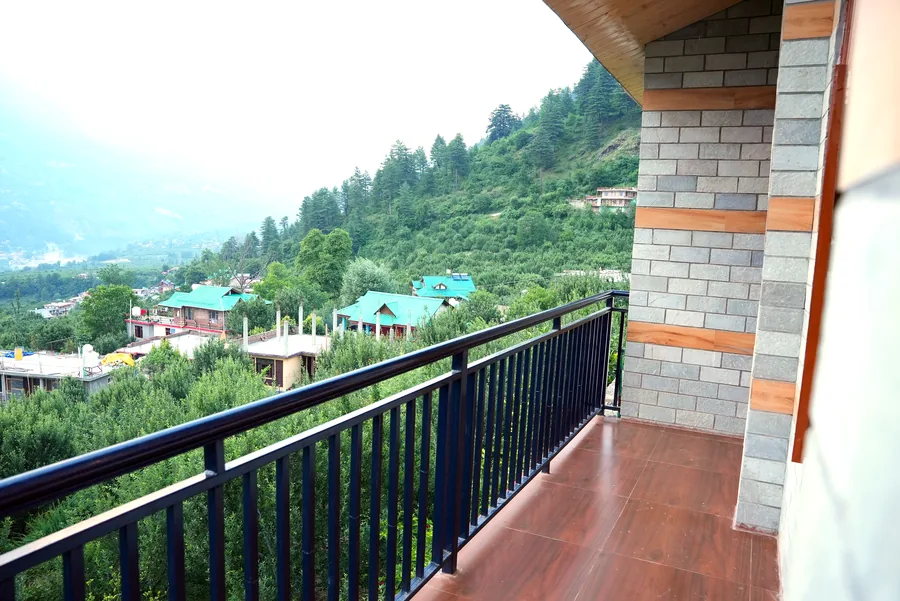
Cross the mountains east of the Kullu valley and the world changes completely. The green orchards and deodar forests give way to a vast, treeless high desert of ochre cliffs and whitewashed monasteries: this is Spiti, one of the most extraordinary landscapes in the Indian Himalaya. At its heart sit the town of Kaza and, perched on a crag above the river, the unforgettable Key Monastery.
Key Monastery
Key Gompa (also spelled Ki or Kye) is the largest and one of the oldest monasteries in Spiti, standing at around 4,166 metres about 12 kilometres from Kaza. Its history is nearly a thousand years long and violently eventful — Mongol raids, Dogra armies, fire and the 1975 earthquake each damaged it, and the monks simply rebuilt over the ruins every time. The result is a tumbling, fortress-like maze of prayer rooms linked by dark passages and narrow stairways. Inside you'll find beautiful murals, old thangkas, rare manuscripts and ceremonial wind instruments; in 2000 the Dalai Lama held a Kalachakra ceremony here. The climb to the upper prayer halls rewards you with one of the finest views in all of Spiti.
Kaza and beyond
Kaza, the valley's main town, is a friendly cluster of guesthouses, cafés and the local subdivisional offices — a natural base for exploring. From here you can reach two more astonishing monasteries: Dhankar, the old capital of Spiti, dramatically set above the confluence of the Spiti and Pin rivers; and Tabo, founded in 996 AD and nicknamed the "Ajanta of the Himalayas" for its centuries-old murals and meditation caves.
How to reach Spiti from Naggar
From Naggar, the summer route runs up to Manali, through the Atal Tunnel into Lahaul, and then east over the high Kunzum Pass (around 4,550 metres) to Kaza — roughly 200 kilometres of spectacular, often rough mountain road. It is a full, tiring day's drive, so most travellers break the journey and plan three to four days at least. The road is typically open only from around June to October; heavy snow closes Kunzum in winter.
Practical tips
- Altitude: Spiti is high and dry. Acclimatise in Kaza before pushing higher, drink plenty of water, and don't rush the first day.
- Season: June to September is the reliable window; carry warm layers even in summer.
- Monastery etiquette: Dress modestly, remove shoes in prayer halls, ask before photographing monks or interiors, and walk clockwise around shrines.
- Fuel and cash: Kaza has the region's only fuel pump and limited ATMs — fill up and carry cash.
A Spiti trip is a serious undertaking, and the smartest way to do it is to acclimatise gently in the Kullu valley first. A few slow days at Ghar in the Hills in Naggar — walking, resting and adjusting to mountain air — is a gentle warm-up before the long climb over Kunzum.
Ready for the great crossing into Spiti? Give yourself time, respect the altitude, and start with a few restful days in the hills. Book your stay at Ghar in the Hills and let Naggar ease you towards one of the Himalaya's most breathtaking valleys.