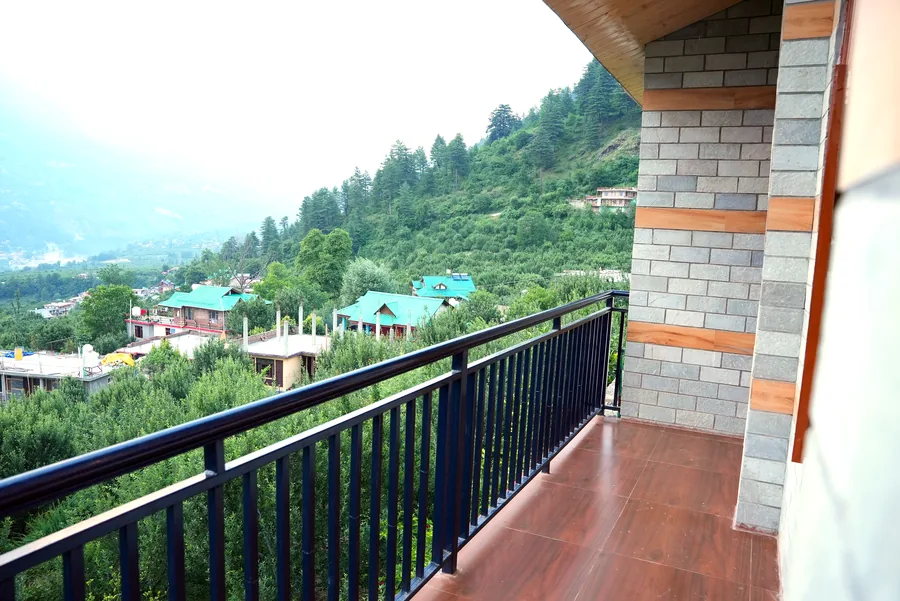
Kasol gets the crowds, Tosh gets the views — but just above them, where the road finally runs out at Barshaini, three small villages sit in near-silence. Kalga, Pulga and Tulga have no roads into them, only footpaths, and that single fact keeps them slow, green and wonderfully removed. They are among the loveliest short escapes in the upper Parvati Valley, and easy to fold into a longer trip from Naggar.
Three villages, one hillside
All three cluster around Barshaini, the last motorable point in the valley and the trailhead for the popular Kheerganga trek. Wooden Kath-Kuni houses, apple orchards, and old pine forest set the scene; because vehicles cannot reach them, the loudest sounds are usually birdsong and the river far below.
- Kalga — the largest and easiest to reach, about a 30-minute walk uphill from the Barshaini dam, with orchard guesthouses and cafes tucked among the trees.
- Pulga — a little higher, roughly a 40–45 minute climb, known for its old-growth forest edge that travellers nickname the 'fairy forest'.
- Tulga — the smallest and quietest, a 20–30 minute walk across a small bridge, good for a short wander.
How to reach the villages from Naggar
From Naggar, head south to Bhuntar (about 1.5–2 hours), where the Parvati Valley road branches east. Follow it through Kasol and Manikaran to Barshaini, the end of the road — roughly 4 to 5 hours from Naggar in total. From Barshaini, park or step off the bus and walk up: half an hour to Kalga, a little more to Pulga. Without your own vehicle, take a bus or shared cab to Bhuntar, then onward Parvati Valley buses run to Barshaini through the day.
What to do
This is a place for staying put rather than sightseeing. Spend a morning walking between the three hamlets, sit in an orchard cafe with a book, and watch the light change on the peaks at the head of the valley. Barshaini is also the launch point for the Kheerganga trek to its hot spring, so many travellers use Kalga or Pulga as a peaceful night before or after the climb.
Practical tips
Come between March and June or September and November; monsoon brings landslides to the Parvati road and heavy winter snow can cut off the upper villages. Carry enough cash from Bhuntar or Kasol, as there are no ATMs past Manikaran. Wear proper shoes for the walk up — the paths are stony — and travel light, since everything you bring you carry on foot. Please treat the villages gently: they are homes, not resorts.
The upper Parvati makes a rewarding two- or three-day loop from a valley base. Settle in first at Ghar in the Hills in Naggar, get your bearings over a hot breakfast, and set off for Barshaini rested — book your stay and ask us for the latest road news before you go.