
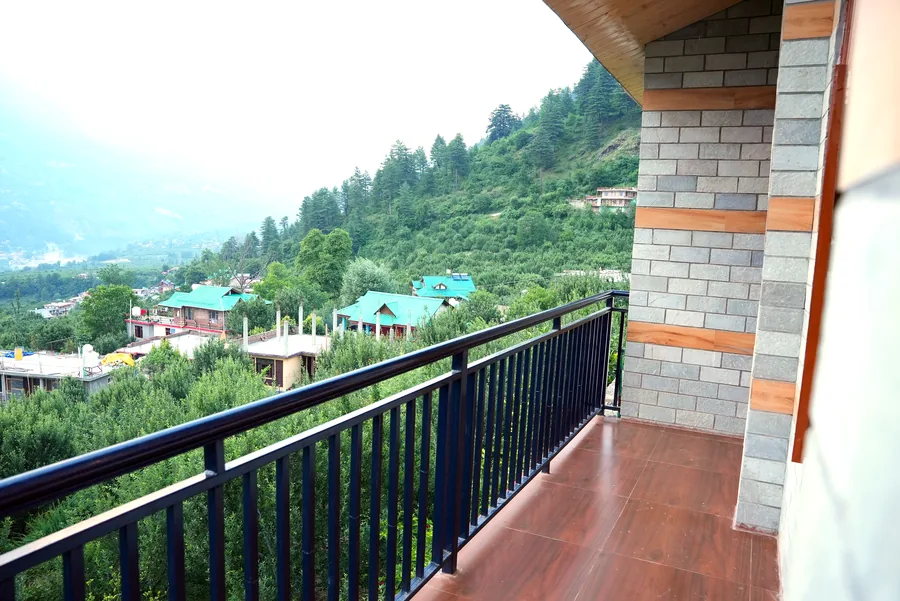
Beyond Kinnaur's better-known stops there's a green river-valley village that many travellers drive straight past on the way to Chitkul — and shouldn't. Rakcham sits halfway up the Baspa (Sangla) Valley, cradled between orchards and pine, with the milky Baspa river running below and snow peaks standing over it. It's the kind of place that earns the valley its nickname, the "Switzerland of India".
Where it is
Rakcham lies at about 3,050 m in Kinnaur, roughly 12 km from Sangla and another 12 km short of Chitkul, the last inhabited village near the Tibet border. The Baspa Valley opens off NH-5 about 16 km up from the Karcham junction. From Naggar this is a serious drive — well over 200 km of winding mountain highway — so Rakcham is best treated as part of a two- or three-day Kinnaur trip rather than a day out.
What to do there
Rakcham is a village for slowing down. Walk its lanes of wood-and-stone houses, watch families sorting the autumn apple and rajma harvest, and follow the paths down to the Baspa where the water runs clear and cold over pale boulders. In spring the apricot and apple trees blossom; by late summer the meadows are thick with wildflowers; and in autumn the poplars turn gold against the peaks. There's little in the way of formal sights here, and that is precisely the point.
Practical tips
- Best time: April to June for blossom and lingering snow, July to September for green meadows, October to November for crisp, clear views.
- Getting there: Drive from the Kullu valley towards Rampur and on to Karcham on NH-5, then turn up into the Sangla/Baspa Valley; Rakcham is between Sangla and Chitkul.
- Permits: Indian travellers don't need a permit for Rakcham or Chitkul, but carry a photo ID as you're close to the border.
- Stay warm: nights are cold even in summer at this height, so pack layers.
Kinnaur is a long haul from the Kullu valley, so it pays to start rested. Spend your first night in Naggar at Ghar in the Hills, a warm homestay right in the village, and set off for the Baspa the next morning fresh and unhurried.
Rakcham won't shout for your attention. Give it an afternoon and an evening, let the river and the peaks do their quiet work, and you'll understand why those who find it tend to stay a night longer than they planned.